1. Vimalakīrtinirdeśa Chapter 7 §1
This is Chapter 7 §1 from Vimalakirtinirdesa : A Sanskrit Edition Based upon the Manuscript Newly Found at the Potala Palace. March 2006, TAISHO UNIVERSITY PRESS, TOKYO with removing |s.
|
atha : khalu mañjuśrīḥ kumārabhūto vimalakīrtiṃ licchaviṃ
|
2. The list of non-Buddha-lands and skills/character to aquire
I translated the list extracted from the section into English. I wish it helps readers in one way or another.
3. Difference between Chinese translation ver.
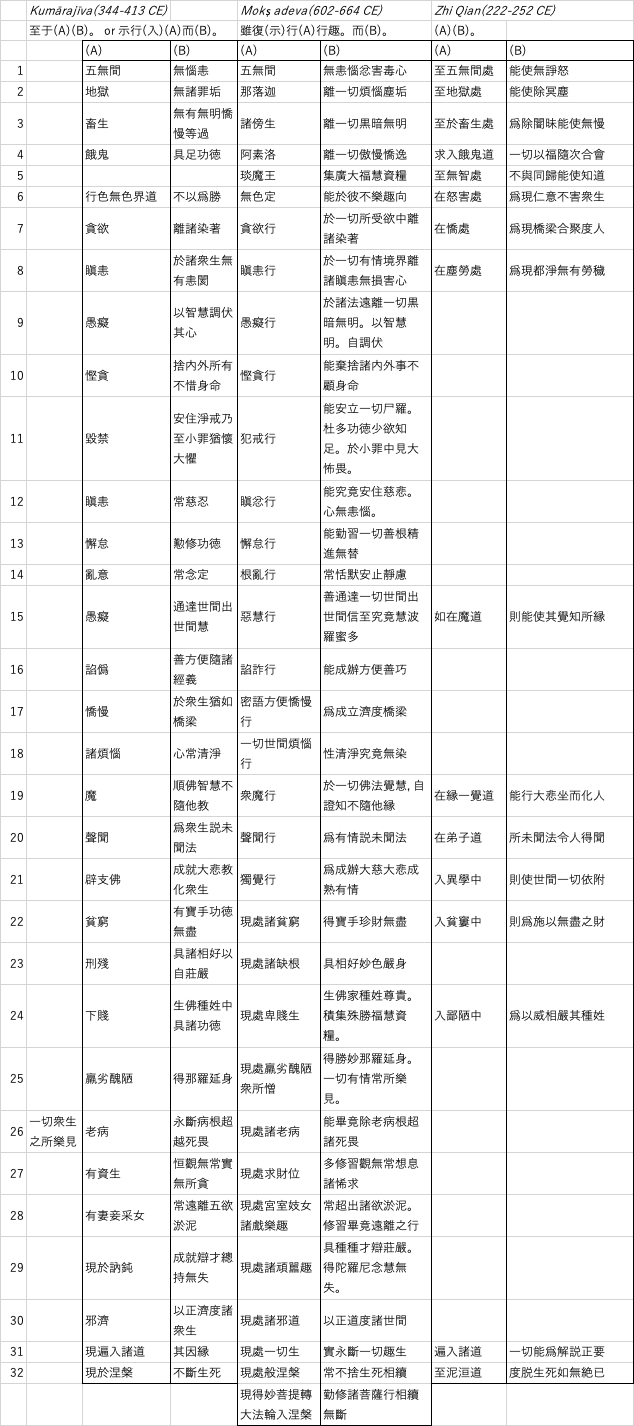
For readers’ reference, here I present a comparison of three Chinese translation from Japanese Taiśotripitakaṃ.
Note 1. Comparing my translation(Section 2. FIg 2. of this article), (C) parts are merged to previous (B) and the (C) meaning is not clarified. Recent translations from Sanskrit ver. like this also ignore (C) part. Kumārajiva 26th row “一切衆生之所樂見” is only (C) part found within traditional Chinese translations.
Note 2. Concerning 17th row, Kumārajīva and Mokṣadeva translated“setu-saṃkrāma-bhṛtaś” into the active voice, but “bhṛtaś” is actually passive voice. Additionally, according to Google Gemini, “setu-saṃkrāma” particularly means the bridge of Rama from Rāmāyaṇa episode “The battle of Lanka” . So this seems to mean “The skilled Bodhisattvas are insured the ferry by the whole world.” rather than “insure the bridge for the people.” Google Gemini conversation here. Old conversation on 2025/11/14 here.
Table 3. A comparison of three Chinese translations


コメント