
What is “good for health”?
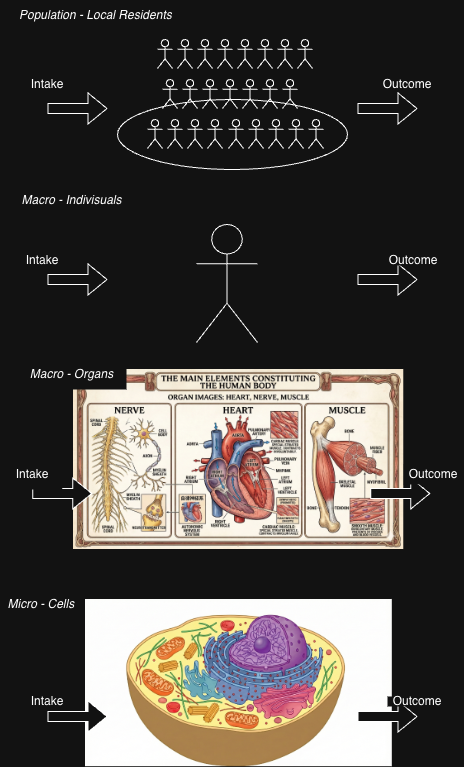
Since the human body(and human social groups) is a complex system made of various components with in-between interactions, it is difficult for us to understand what is “good for health” or not. As usual when it comes to the complex problem, “divide and rule” is a good rule of thumb here. I divide it into four hierarchical layers, “Population“, “indivisuals“, “organs“, and “cells“.
In case of Magnesium
Magnesium is a very well-known element known for over two centuries. However, the biological role in human body is still not fully understood and the investigation is under the way. Table 1. is my literature-organization(on the way) following the policy above.
| Micro (cell) | Macro (Individual or small group of people, annecdotal) | Population (Cohort) | ||||
| Muscle cells | Nerve cells | Muscle | Nerve | Muscle | Nerve(epilepsy) | |
| TRPM6 shows 50% sequence homology with TRPM7 (also known as TRP-PLIK), which forms a Ca2+ and Mg2+-permeable cation channel. | ***Ivannikov2011 | *Dr. von Bärz’s rikshaw | Tymoor2019 | |||
| Kandel2014 | *Hikyaku runners | Guo2023 | ||||
| TRPM6 shows 50% sequence homology with TRPM7 (also known as TRP-PLIK), which forms a Ca2+ and Mg2+-permeable cation channel. | *Sakata female labourers | **UHiroshima2023 | ||||
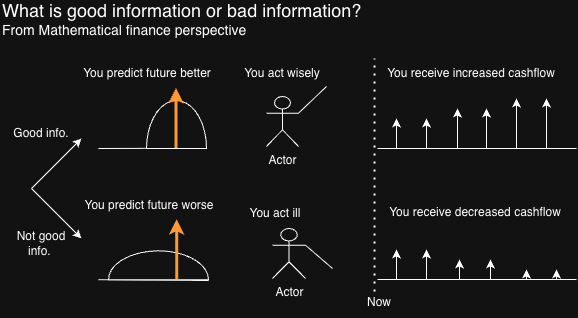
Merit of knowledge
Fig 2. shows why is it good for us to know.
Credit
Figures in Fig 1. (“The main elements constituting the human body” and the cell”) are generated with Google Gemini.

コメント