A knowledge master, loving absorption, mindful,
who has reached awakening and is a refuge for many:
that is where a brahmin seeking merit
should bestow a timely offering as sacrifice.Sutta Nipāta Verse 503
From whomsoever one might learnthe Dhamma of the Perfectly Awakened One,one should respectfully pay homage to that person,as a brahmin reveres the sacrificial fire.Dhammapada 392
1. Explained by figures.

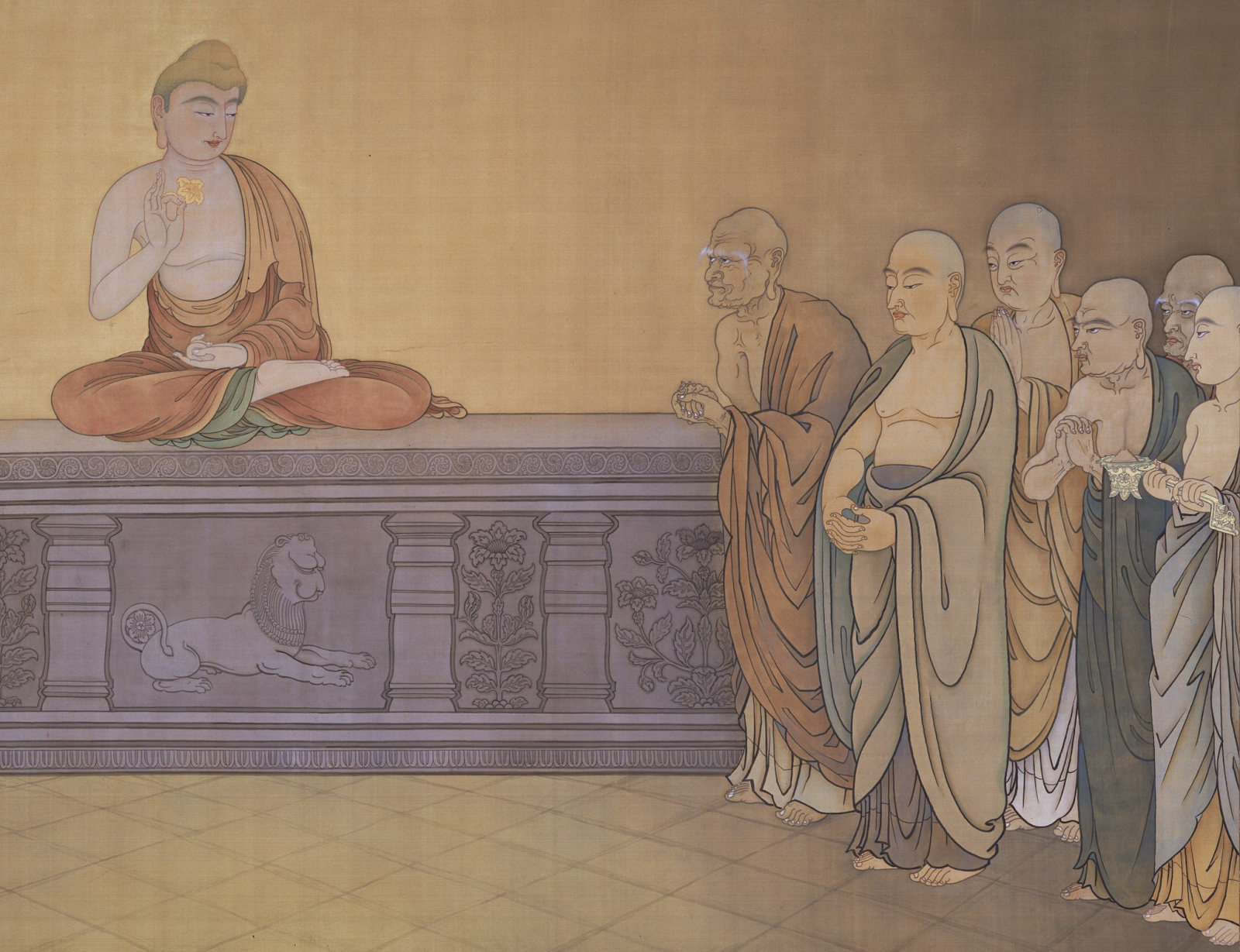
Fig 1.1 Showing a flower and a smile: Buddha is believed to give his teachings not necessarily with words.

Fig 2.1 Single Point “No buddha-nature” theory

Fig 2.2 Threshold hypothesis
2. Sidenote

Fig 3. A little tips for market chance-make: Find the misvalued
Credit
**Sutta Nipāta verse 503** (from the **Āmagandha Sutta**, Sn 2.2, in the Cūḷavagga chapter) is part of a dialogue where the Buddha explains true “impurity” (āmagaṇḍha) and describes qualities of a true brahmin (in the spiritual sense). ### Pali (standard PTS edition): Yo vedagū jhānarato satīmā sambodhipatto saraṇaṃ bahunnaṃ, kālena tamhi havyaṃ pavecche yo brāhmaṇo puññapekho yajetha. ### English Translation (Fausbøll, 1881, slightly modernized wording): “He who is accomplished (in knowledge), and delights in meditation, thoughtful, possessed of thorough enlightenment, a refuge for many, on such a one in due time should one offer oblations; the brahmin who seeks merit should sacrifice to him.” ### Alternative modern renderings: – **Bhikkhu Sujato style / contemporary**: “One who has mastered the scriptures, delights in absorption (jhāna), is mindful, has attained full awakening, and is a refuge for many— in due season one should offer sacrifice to such a person; a brahmin seeking merit should make offerings to him.” – **Another version (e.g., close to Candana or similar recent editions)**: “Those who possess the Higher Knowledges, are mindful throughout, as they correctly engage in the practice of the jhānas, and having attained Full Awakening, become a refuge for many— in due time, one should make offerings to such a person; the brahmin who desires merit should perform sacrifice to him.” This verse concludes the Buddha’s description of the true brahmin (not by birth, but by qualities and attainment) to whom offerings (havyaṃ = oblations/sacrificial gifts) should be made for generating merit (puñña). It contrasts sharply with ritualistic Vedic brahminism, redirecting the idea of “worthy recipients” toward those who are spiritually realized. The surrounding verses (e.g., 500–504) build this portrait of ethical and awakened conduct as the real purity and worthiness for offerings. If you’re looking for the full Āmagandha Sutta context, a different translation, or commentary, let me know!
### Dhammapada Verse 392 (Brāhmaṇavagga – The Holy Man) #### Pali Original: yamhā dhammaṃ vijāneyya sammāsambuddhadesitaṃ sakkaccaṃ taṃ namasseyya aggihuttaṃva brāhmaṇo. 0 #### English Translation: From whomsoever one might learn the Dhamma of the Perfectly Awakened One, one should respectfully pay homage to that person, as a brahmin reveres the sacrificial fire. 1 3 4 This verse emphasizes the importance of honoring one’s teacher of the Buddha’s teachings with the same devotion a brahmin shows to the sacred fire ritual. It comes from the story of Venerable Sāriputta, a chief disciple of the Buddha, who continued to pay respect to his initial teacher even after attaining enlightenment. 0 2

コメント